
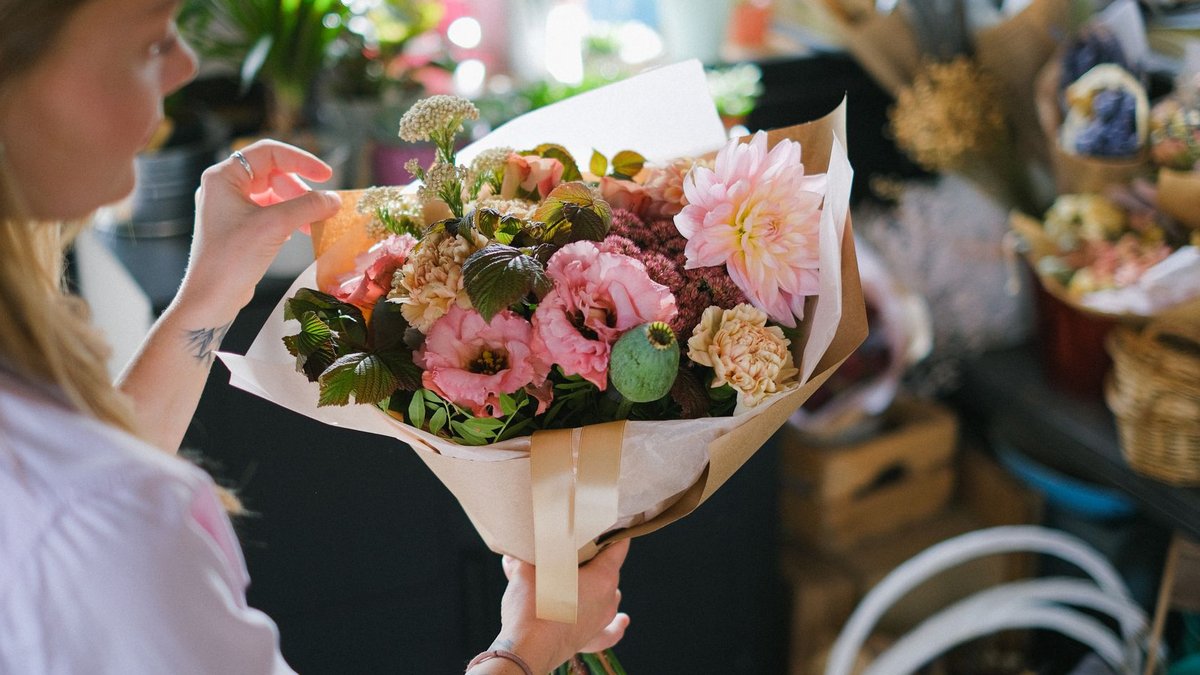
Sarah Raven’s fascination with cut flowers began in her parents’ vegetable patch when she was seven years old. Like many children, she started by picking simple blooms from the lawn—daisies, buttercups, and dandelions. Her father, who possessed deep knowledge of butterflies, birds, and wildflowers, helped develop this interest. He passed that specific love of nature directly to her.
Learning the Ropes at Perch Hill
While the interest started early, she really began growing cut flowers in earnest 33 years ago. That was when she moved to East Sussex and established Perch Hill farm. She admits she knew nothing about growing then. She was determined to learn as much as she could because she wanted fresh flowers for the house. It was a journey of trial and error from the start.
One of the biggest challenges she faced was extending the vase life of delicate varieties. Hellebores, for example, turn limp and flop all too easily after cutting. Over the last 40 years, she has trialed and experimented many times to solve this. Luckily, she figured out that searing has a miraculous effect on vase life. Even if they have flopped already, many flowers will make a total recovery with this treatment.
This methodology highlights a practical truth about horticulture: it is a science of adaptation rather than just art. The willingness to test traditional limits—like cutting a flower that seems destined to wilt—transforms the average gardener from a passive observer into an active participant in the plant’s life cycle. It suggests that solutions are often found in physical manipulation rather than expensive products.
Related: Style Icon Rachel Mellon Dies
Essential Plants for Beginners
For people with no experience or small gardens, Raven recommends starting with four specific plants. These should all be “cut and come again” varieties that provide continuous blooms. She suggests a container-compatible dahlia, such as ‘Molly Raven.’ She also recommends a compact variety of cosmos, like ‘Sonata Carmine’ or ‘Sensation White.’
For foliage, she suggests cerinthe for small gardens or beginners. To add height, she advises choosing a long-flowering vertical spike provider, such as the Antirrhinum ‘Liberty Crimson.’ These are easy to grow and productive plants. The combination of all four will make a beautiful, standout arrangement.
To encourage someone intimidated by gardening, Raven points to her own past. She knew very little when she started. She suggests beginners start with seedlings or young plants rather than sowing from seed. She emphasizes that the more you pick, the more they flower, which is good for the plant.
Techniques for Structure and Arranging
Arranging can be just as daunting as growing. Raven suggests splitting the process down into manageable parts. Use just one foliage, one structure giver, and two flowers. These should be as contrasting in color and shape as possible. To give the arrangement layers, make sure one flower is flat or domed in shape. The other should be a spike or vertical spire.
Related: Garden flowers become striking artworks
A bunch of a single type of flower can also be beautiful. For a mass of foxgloves, she recommends finding a flexible branch. Willow, hazel, or birch twigs work well if they are pliable. Make these into a nest in the body of the vase. Use it like natural chicken wire. Start at the center with one stem going right in the middle, then three or four around, working outwards. Finish by making sure there is a graceful twist and turn of stems over the vase’s edge.
The Joy of Propagation
Raven finds propagating to be her favorite part of the process. This includes sowing seed, pricking out seedlings a few weeks later, and planting them into the garden. She draws patterns and drifts as she plants. She walks around the garden at dawn to work out great combinations for a vase, picking a flower of each into her hand as she goes.
Raven dedicates a whole chapter to color in her work. “Dark and rich” is the palette she comes back to time and time again. This is the one she is most drawn to. She finds it lovely with a splash of one flower from the “Boiled Sweet” palette or “Soft and Warm” tones, such as cafe au lait. If she had to choose a favorite dahlia for today, it would be ‘Labyrinth’ or ‘Sissinghurst.’
She thinks gardening is for the optimist and the greedy flower lover, and for anyone who wants to fill their house with colour and scent without going shopping. That’s what this book is about.


