
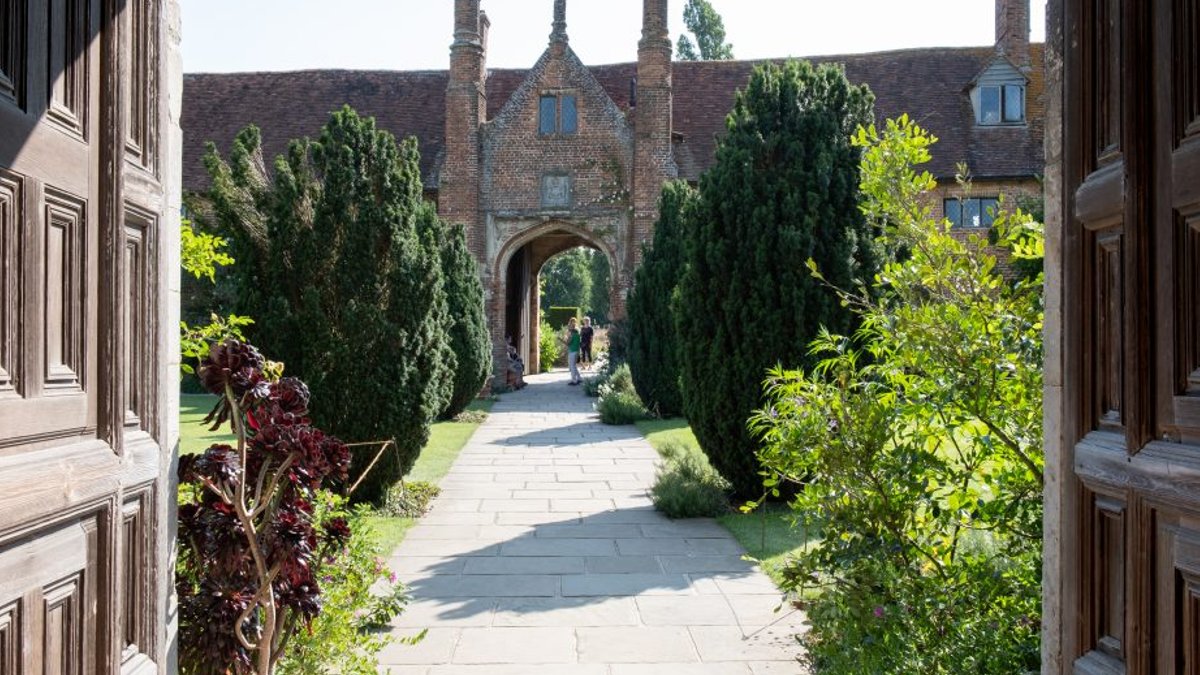
Climbing plants at Sissinghurst Castle Garden define its romantic, layered design. The National Trust’s first Sissinghurst Scholar, senior gardener Claire Margetts, has identified the best performers from the estate. These plants thrive in shade, adapt to most soils, and provide fragrance, color, and wildlife benefits throughout the year.
Margetts participates in an 18-month program training future head gardeners under Troy Scott Smith. She highlights Vita Sackville-West’s view that climbers rank among the most useful plants in any garden. The sentiment reflects the hundreds of clematis and roses draping Sissinghurst’s medieval walls, farm buildings, and chestnut structures.
Roses for shade and seasonal fragrance
Rosa ‘Mermaid’ excels on north-facing walls. This vigorous climber grows about 10 meters and produces large, single yellow flowers from early summer into autumn. Bees and butterflies flock to its luminous blooms, and it needs only minimal pruning—removing dead wood. Margetts recommends training it in gentle curves to improve winter structure and encourage flowering buds.
She suggests planting ‘Mermaid’ in large spaces where it can cover unsightly structures or soften mature trees and boundaries. The rose tolerates partial shade, offering flexibility for gardens with limited light.
Clematis and quinces for structure and visual appeal
Clematis tangutica, known as golden clematis, stands out with its bright, bell-shaped flowers that resemble tiny lanterns. It reaches 3 meters, though the compact ‘Little Lemons’ stays under 50 centimeters, making it suitable for pots. Margetts values its wildlife appeal and ability to soften hard lines on walls, arches, and trellises.
Related: Understanding Pool Types and Lighting Options
From late summer into autumn, it displays yellow flowers against lush foliage. The plant requires little maintenance and prefers partial shade, though a good mulch helps.
Chaenomeles speciosa, or Japanese flowering quince, grows near the library door at Sissinghurst. In spring, it bears vermillion flowers followed by yellow fruits. It espaliers well, reaching 1.8 meters, and its thorns deter intruders along boundaries. Margetts notes its adaptability, thriving in moist, well-drained soil in sun or partial shade.
Chaenomeles ‘Knap Hill Scarlet’ features vivid orange-red flowers in early spring. Glossy green leaves emerge as the season progresses, followed by fragrant, apple-like fruits in autumn. These fruits can be used for jellies and preserves, adding practical value to its ornamental qualities.
Climbers for year-round interest and scent
Hydrangea petiolaris starts slowly but becomes vigorous, reaching 10 to 12 meters. Margetts calls it reliable, especially in shady, difficult areas. Its lacy white flowerheads appear in late spring and early summer, and its dark green leaves turn yellow in autumn. She advises leaving the skeletal flowerheads for winter interest and bud protection.
Parthenocissus henryana, related to Virginia creeper, is selected for its striking autumn hues. Young plants are somewhat tender but become hardy against walls, particularly those facing north. The leaves show silver and pink variegation along the veins, and in sunny spots, they turn rich autumn colors before falling. These plants keep outdoor spaces visually engaging through seasonal changes.
Related: The French Crown Jewels: A Legacy of Love and Power
Wisteria sinensis (white form) matures slowly but rewards patience. Its fragrant, white pea-like flowers hang in pendent clusters in May and June, followed by velvety green seedpods in hot summers. Margetts describes it as elegant, with a vigorous, twining habit ideal for sheltered walls or strong pergolas. It adapts to most soils and becomes a long-lived climber that delivers beauty and fragrance.
Margetts also highlights Clematis ‘Perle d’Azur’, one of the oldest and most reliable clematis varieties. Its delicate true-blue flowers bloom from summer through September, long after others have finished. It grows well in various positions, from walls to containers, offering lasting color.
For something distinctive, Actinidia kolomikta stands out with heart-shaped leaves splashed in pink and white. The variegation appears mostly on the upper sections and may not show on young plants. White, fragrant flowers bloom in early summer. It reaches 3 meters and performs best on a protected wall.
These climbers were chosen for their ability to flourish in challenging conditions—shade, poor soil, or difficult corners. Their resilience and seasonal displays make them practical for gardeners seeking romance, fragrance, and color without constant care.


