
Summer in the UK means longer days and more time outdoors, and for wildlife enthusiasts, it is a prime season for watching garden birds. The RSPB notes that this time of year is especially active, as birds raise their young and gather at feeders and water sources. From the acrobatic long‑tailed tit to the striking jay, a range of species can be spotted in gardens across the country. Knowing which birds to look for and how to identify them makes the experience far more rewarding.
Small Birds, Big Personalities on the Feeder
One of the most recognisable characters at any garden feeder is the long‑tailed tit. Despite its tiny size — just 14 cm, including its namesake tail — this bird has an outsized presence. The bird often travels in small, noisy groups, flitting along hedgerows and raiding suet feeders together. Early summer is when it raises its broods, building nests lined with hundreds of feathers. The nest also uses cobwebs and lichen, materials stretchy enough to let the structure expand as the chicks grow. Once fledged, the youngsters stay nearby, forming winter flocks with their parents.
A Thrush That Defends Its Berries
Distinguishing a song thrush from a mistle thrush takes a bit of practice. The mistle thrush is larger, appears more upright, and has arrow‑shaped spots that sometimes merge into splodges. It also looks paler and greyer than the warm brown song thrush. Both birds sing loudly from high perches, but the mistle thrush earned the old nickname “stormcock” for its habit of singing in all weather, even windy January days. Its alarm call is a loud rattle.
Mistle thrushes are fiercely territorial around food. They love berries, especially mistletoe, and will attack any other bird that tries to share their chosen clump. This aggression has an ecological payoff: birds that defend their “larders” tend to have larger and earlier clutches of eggs. However, mistle thrush numbers have fallen since the 1960s, and the species now appears on the UK Red List. Spotting one in your garden is considered lucky.
Related: Sissinghurst’s top climbers for love and colour
This pattern of decline for some species while others thrive is a reminder that garden bird populations are not static. The same factors that benefit one bird — more feeders, milder winters — can disadvantage another. The mix of species we see today is a snapshot of broader changes in the environment, not a fixed lineup.
The Jay: A Colorful Member of the Crow Family
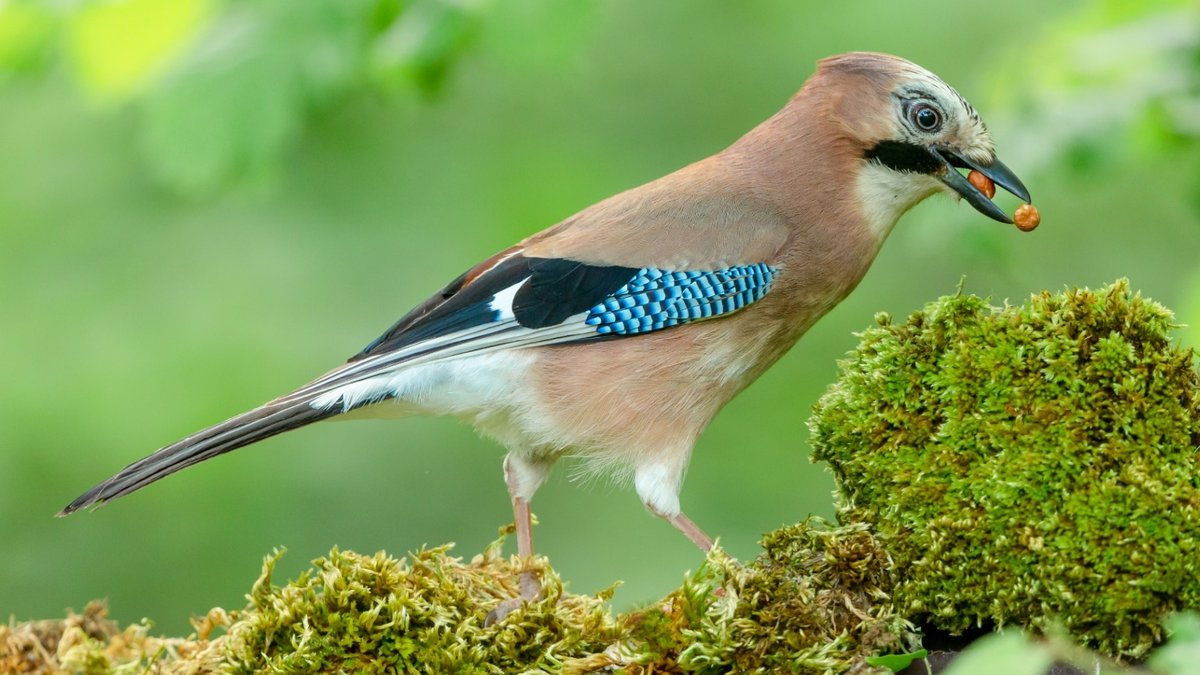
Jays belong to the crow family, but they are far from the typical black plumage. They have a flash of blue on the wing, white patches along the tail, and a black moustache against light dun coloring. They are shy birds, though, and most people see them whirling from tree to tree or hear their screeching call.
They are particularly fond of acorns and will stash them in the ground for winter. Not every acorn gets retrieved, and those left behind sprout into new trees. A recent study of two woodlands in England found that jays were responsible for planting half of the trees on the site. Jay populations are doing well, and there is evidence they are expanding northwards.
Summer Migrants and the Sound of the Season
The chiffchaff is one of the earliest summer visitors to arrive in the UK, and its song is unmistakable: a simple “chiff‑chaff, chiff‑chaff” from the treetops. It is an olive‑brown warbler that snatches insects from leaves. Chiffchaffs are very similar in appearance to willow warblers, so much so that they were only recognised as separate species in the 18th century. The naturalist Gilbert White was the first to distinguish them, noting the difference in their songs. There may be over a million pairs nesting each year.
Related: Plants to Keep Outdoor Spaces Cool
The spotted flycatcher is a quieter summer visitor, and its numbers are falling fast. Between 1970 and 2014, the UK population dropped by 86 %. It perches on a branch in an open area, waits for an insect to buzz by, then launches into the air to grab it. On wet days, it picks insects from the undersides of leaves instead. Gardeners can help by providing nestboxes, prominent perches, and a supply of insects through ponds or flowering borders.
The goldfinch is one of the most colourful birds in UK gardens, with stripy gold wings and a red face. Its collective noun is a “charm,” from the Old English word for the noisy chatter of its song. Goldfinches were once popular as caged birds — 132,000 were taken from one spot in Worthing, Sussex, in 1860 alone. Protecting them was one of the first goals of the RSPB. Today, their numbers are stable, and they can be seen across the country. To attract them, grow teasels or thistles, or offer sunflower hearts and nyjer seeds in a special feeder.
Goldfinches add bright flashes.


