
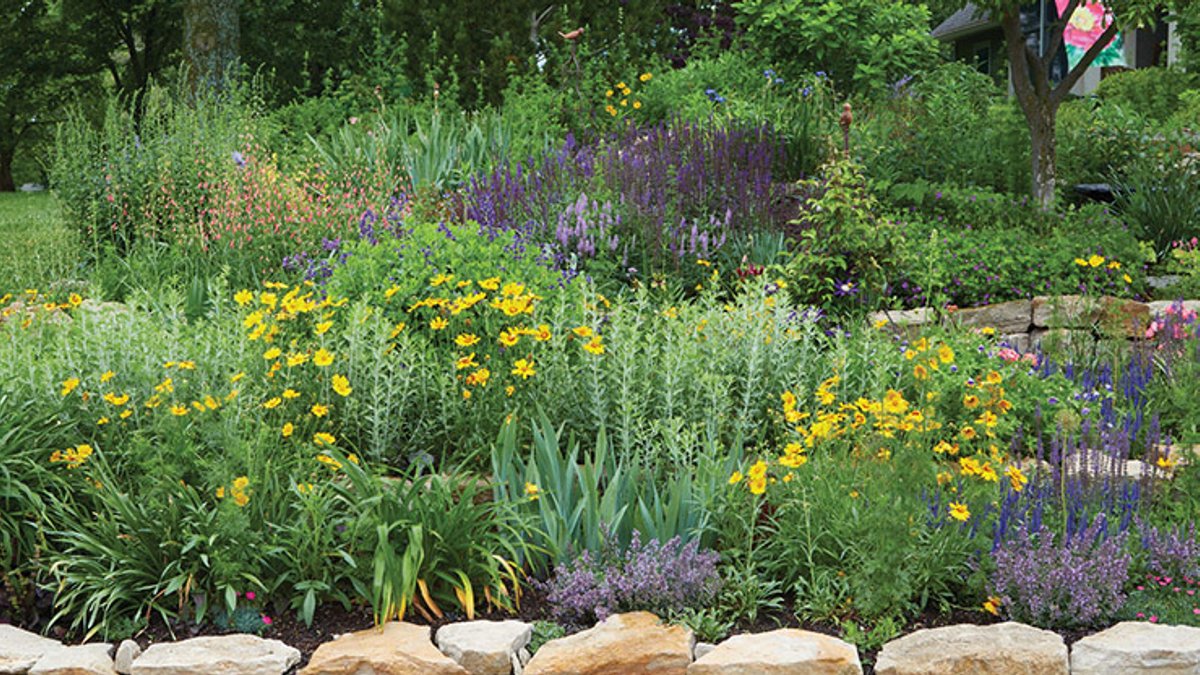
Joyce Householder’s terraced perennial border in Kansas demonstrates how layered planting can both beautify a slope and slow water runoff.
Designing texture and color on a slope
When arranging perennials, the gardener considered each plant’s growth habit, branching pattern and leaf shape. Large, solid leaves draw the eye and make a space feel tighter, while fine, delicate foliage recedes, opening the view. Grassy or sword‑like blades add vertical accents that cut through the mass of foliage.
By mixing these forms, the border creates shifting light and shadow throughout the day.
Even without blooms, varied textures keep the scene interesting. The result feels oddly like a patchwork quilt of leaves, offering depth without relying on flower color alone.
Related: Avoid These 5 Garden Pest Mistakes
Terracing the slope breaks the incline into manageable steps. Each level catches rain, reducing the speed of runoff and limiting erosion. The design also lifts the eye, allowing a clearer view of the plant assortment that thrives in full sun.
Key plants and their roles
The planting scheme relies on a blend of foliage types and bloom periods. Strappy bearded iris foliage provides a dark backdrop, while velvety Russian sage leaves add a soft, silver tone. Solid mounds of false indigo offer a steady visual anchor.
- Salvia nemorosa ‘Caradonna’ – deep blue‑violet spikes, 18‑20 in tall, 12‑18 in wide, zones 4‑9.
- Veronica ‘Lavender Lightsaber’ – lavender spikes, 28‑30 in tall, 18‑20 in wide, zones 4‑8.
- Baptisia ‘Sparkling Sapphires’ – violet‑blue flowers, 30‑36 in tall and wide, zones 4‑9.
- Penstemon barbatus ‘Jingle Bells’ – red‑orange tubular blooms, comparable height, moderate spread, similar zones.
- Perovskia atriplicifolia – lavender‑blue flowers on tall stems, 2‑5 ft tall, 2‑4 ft wide, zones 5‑9. Russian sage stays upright through winter in milder zones.
- Coreopsis lanceolata – yellow daisies, modest height, similar spread, comparable zones.
- Iris ‘Obsidian’ – deep purple to black flowers, medium stature, similar spread, comparable zones.
- Nepeta faassenii ‘Cat’s Meow’ – blue‑purple blooms, medium height, generous width, comparable zones.
These selections cover early spring to late fall, ensuring that some visual interest remains throughout the growing season.
Maintaining the border involves strategic deadheading and pruning. After the first flush, cutting back salvia, speedwell, penstemon and catmint encourages a light rebloom. Snipping faded iris blossoms keeps the plant tidy, while allowing false indigo seed pods to mature adds winter texture.
Most perennials die back in winter; removing dead foliage after frost or in early spring clears the area for new growth. Russian sage stems can remain standing for winter structure in warmer zones, but in colder areas they are trimmed to 8‑12 in before new leaves appear.
Related: Garden flowers become striking artworks
Given the mix of semi‑evergreen and fully die‑back species, the border offers both seasonal change and year‑round form.
Terracing also adds visual interest.
Future success will likely depend on how well the plant community adapts to variable weather patterns. If summer rains become more intense, the terraces may need additional reinforcement to keep soil in place. Conversely, milder winters could allow more of the semi‑evergreen foliage to persist, enhancing visual continuity.
Joyce’s approach highlights the practical side of ornamental gardening: using plant texture and structure to solve a garden problem and provide a colorful display. The border continues to evolve as each season passes, with the same core plants providing a reliable framework for future adjustments.


