
At 8:00 a.m., Dr. Jeremy Slone checks his email before sitting down. The entomologist scans messages first—someone may have a tree in crisis.
“I check all the media the minute I arrive at the lab to make sure the field team has what they need,” he said. Whether it’s termites, transplant shock, or an irrigation failure, troubleshooting comes first. A single tree—or an entire forest—can depend on it.
Beetles as breakfast, data as a byproduct
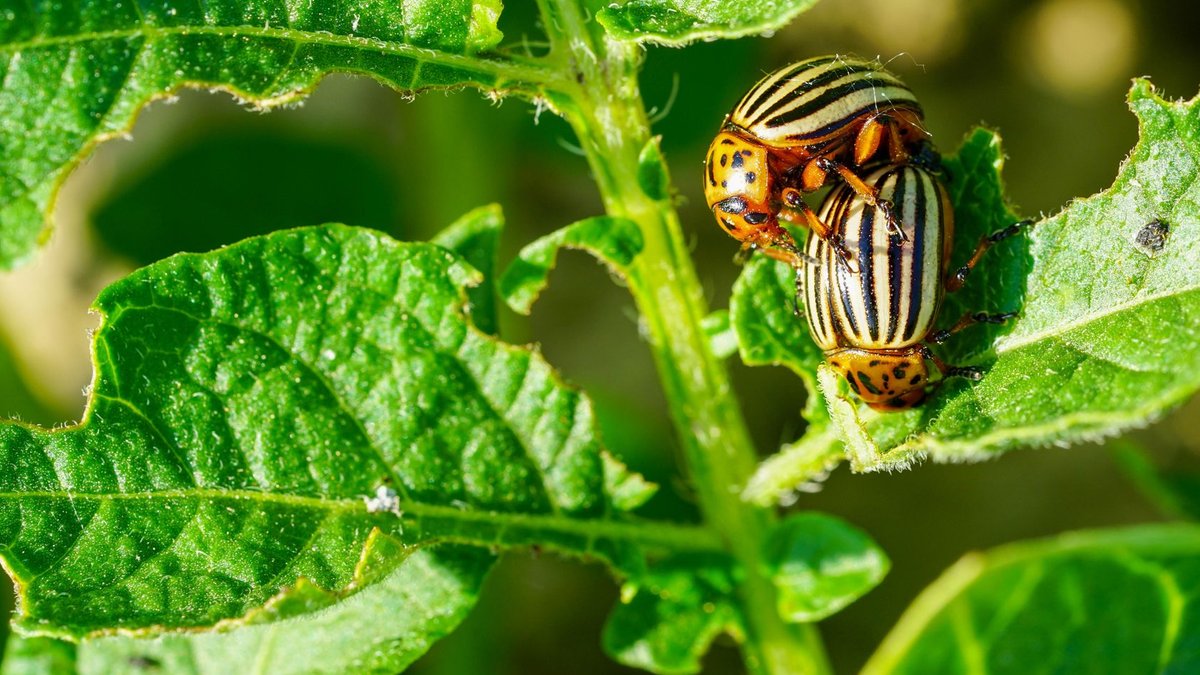
Slone’s next task involves Japanese beetles. While most people avoid them, his group at Bartlett Tree Research Laboratories maintains a colony for study. Feeding time for the insects doubles as data collection.
Related: Parisian style revives Boston luxury condo
The team tests whether the beetles prefer leaves treated with growth regulators. They also explore ways to make trees less attractive to pests. Trials take place across the 350-acre campus in Charlotte, North Carolina, where bait traps are checked and experiments recorded.
Ambrosia beetles often act as an early warning. Their presence can indicate shrubs are stressed from flooding, root disease, or other environmental factors. Other tests track seasonal temperature changes to pinpoint the best time for treatments, targeting pests when they’re most vulnerable.
After checking traps, Slone loads a backpack sprayer with an experimental mix of beneficial nematodes. The target is peach tree borers. Once the trees are treated, he answers calls about pest or disease solutions that meet state or provincial rules.
Related: Carla Coulson Launches Young Girl in Bloom Series
“It’s all about prioritizing and triage,” he said at the end of the day. “Saving the planet and its woody population.”
A lab built for trees, not just research
Slone works with 55 scientists, technicians, and plant diagnosticians at the Charlotte facility. His colleague, Dr. Matt Borden, DPM, provides the big picture. The research lab was the brainchild of F.A. Bartlett, founder of Bartlett Tree Experts. Originally based at the Bartlett Arboretum in Stamford, CT, the Charlotte facility opened in 1965 and now nurtures 32,000 plants utilized to study anything from disease issues to environmental stress factors.
A study examined the short lifespan of street trees, which usually live only seven years. The team planted trees in a fabricated paved area at the lab to replicate urban conditions. They tested groundcover materials, hole sizes, soils, alternative species, and the infrastructure below ground to improve survival rates. “The goal was to build up the body of literature and improve the grim mortality rate for street trees,” Dr. Borden explains. “That study on urban arboriculture can be very impactful.”
Related: Cape Ann designer finds inspiration in rugged coast
The arboretum is host to collections of magnolias, oaks, camellias, boxwoods, redbuds, dogwoods, and hawthorns—to name only a handful of the lab’s arboreal occupants. Each population is subjected to various experiments including long-term pruning trials, as well as disease and insect management. Trees on the verge of extinction are nurtured and shared with other arboreta; data is collected and compared with other facilities. Students come for tours, master gardeners visit to learn.
Slone accepts the demanding pace. “I feel very fortunate to be here,” he said. “I’m proud of what I’m doing for the environment. This is a very unique spot.”


