
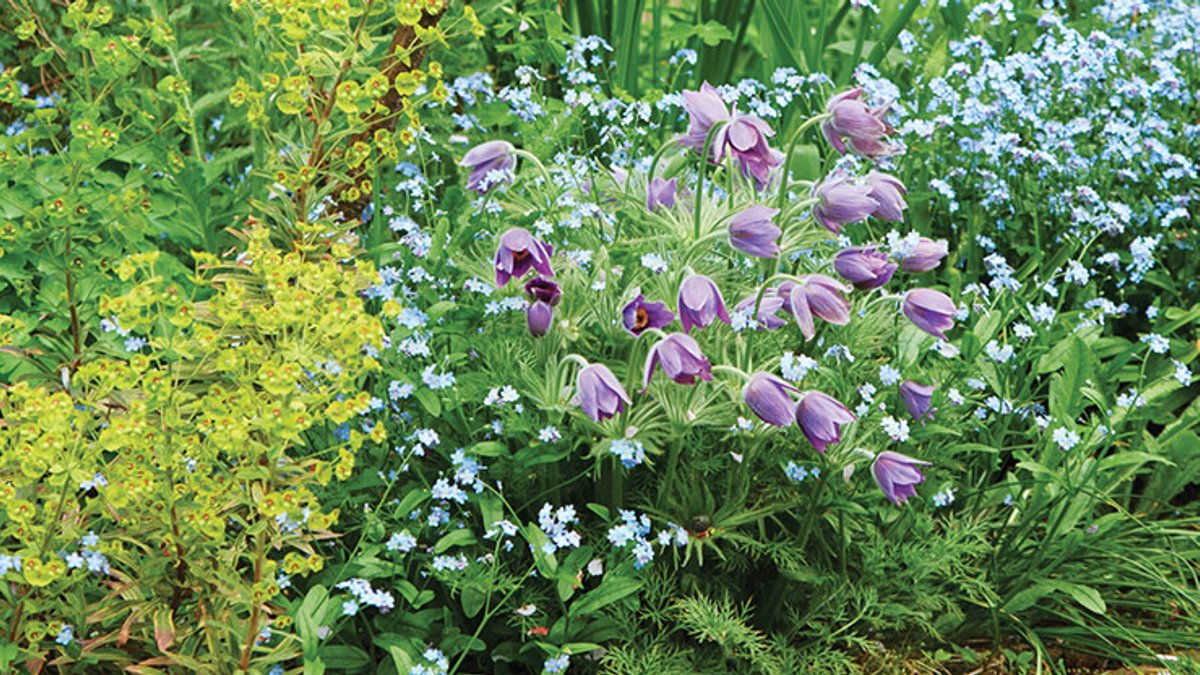
Using reseeding plants can create visual continuity across a large yard without constant pruning or replanting.
How volunteers shape a Vancouver property
Ted and Nadine Staunton let many seedlings self‑seed around the structural trees and shrubs on their west‑side plot. “I tend to leave most of them unless they’re in the way or impeding another plant,” the gardener says, noting the size of the area makes daily grooming impractical.
Related: Create Order in Your Garden
Nadine rarely deadheads; instead she pulls back the volunteers she doesn’t need. An earlier mistake taught her to avoid composting seed‑filled stems after a bout of forget‑me‑not blooms turned the compost pile into a future seed source.
Despite that setback, the pair continues to enjoy the swaths of sky‑blue flowers that appear each spring. Their approach demonstrates how a handful of fast‑spreading species can fill gaps that would otherwise stay bare.
Fast‑spreading choices favored by the Stauntons
- Lady’s mantle (Alchemilla mollis) – chartreuse blooms late spring to early summer; height 10‑18 in., spread 18‑30 in.; hardy USDA zones 4‑8.
- Spiderwort (Tradescantia virginiana) – clusters of three‑petaled purple, pink or white flowers late spring; 18‑24 in. tall and wide; hardy zones 4‑9.
- Forget‑me‑not (Myosotis sylvatica) – tiny sky‑blue flowers late spring; 6‑9 in. tall, 6‑12 in. wide; hardy zones 3‑8.
- Serbian bellflower (Campanula poscharskyana) – blue star‑shaped flowers spring; 8‑10 in. tall, 18‑24 in. wide; hardy zones 4‑7.
- Black‑eyed Susan (Rudbeckia spp. and hybrids) – golden daisy‑shaped flowers with dark centers midsummer to fall; 2‑3 ft. tall, 1‑2 ft. wide; hardy zones 3‑8.
- Wild columbine (Aquilegia canadensis) – nodding two‑tone red and yellow flowers late spring to early summer; 12‑36 in. tall, 12‑18 in. wide; hardy zones 3‑8.
- Bachelor’s button (Centaurea cyanus) – cornflower blue flowers late spring to early summer; 24‑30 in. tall, 9‑12 in. wide.
- Spanish bluebells (Hyacinthoides hispanica) – pendulous lavender flowers spring; 12‑18 in. tall, 3‑6 in. wide; hardy zones 4‑9.
These species share a common trait: they disperse seed readily, allowing new plants to appear in open spots each year. The result is a shifting mix of color that requires only occasional thinning.
Related: Couple marks anniversary with UK garden trip
From a practical standpoint, the Stauntons’ method reduces the need for large seed purchases. Once a few individuals become established, the garden essentially replants itself, freeing time for other tasks such as soil amendment or pest monitoring.
In the middle of the growing season, a modest amount of oversight—removing unwanted seedlings and ensuring adequate spacing—helps maintain the intended pattern without turning the yard into a dense thicket.


