
European garden design has shaped outdoor spaces for centuries, with formal hedges, climbing roses, and ornamental water features defining some of the world’s most storied environments. While grand estate gardens might seem out of reach for modern homeowners, many classic design principles translate surprisingly well to smaller yards and suburban settings.
The appeal lies in timelessness. These techniques have endured because they work with natural elements to create spaces that feel both structured and inviting. Whether you’re working with a modest courtyard or a sprawling backyard, incorporating even subtle elements of European garden design can transform your outdoor space into something memorable.
Structured Greenery: Parterre and Topiary
Formal hedges and sculpted plants represent some of the most recognizable elements of European garden design. Parterres emerged in 16th-century France during the Renaissance as status symbols, requiring significant labor to maintain their detailed patterns. Topiary, with its carefully shaped shrubs and trees, dates back even further to ancient Roman gardens.
Modern homeowners can adapt these concepts without extensive maintenance commitments. A pair of potted boxwood spirals near an entryway adds instant elegance, while privacy hedges don’t need to be uniform green walls. Boxwoods typically require trimming two to three times annually to maintain clean lines, while slower-growing yews need shaping just once per year.
Related: Reseeding Plants Brings Repetition to Gardens
Starting with young plants makes training much simpler. Avoid removing more than one-third of a plant’s foliage at once to prevent stress. Good candidates for home gardens include boxwood, yew, and Japanese holly—plants that respond well to regular pruning and hold their shapes throughout growing seasons.
Vertical Interest: Climbing Plants and Structures
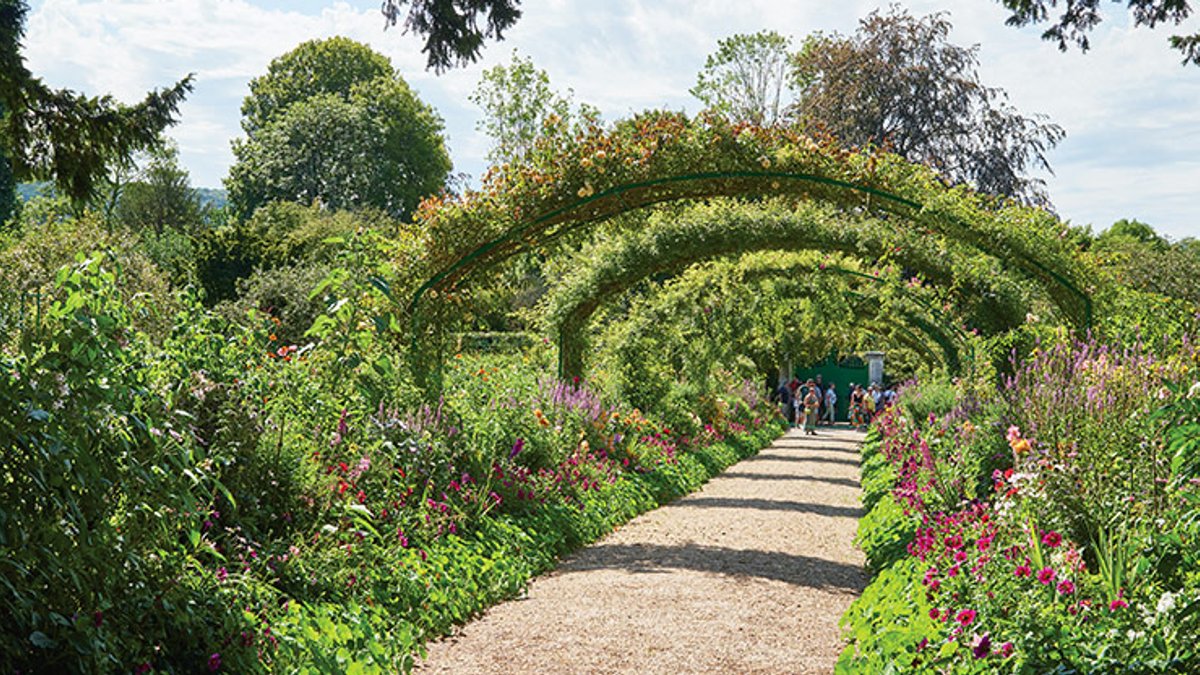
Climbing plants serve a unique purpose in European garden design, softening the boundary between constructed elements and natural growth. Rose-covered arches, like those famous at Monet’s Garden in Giverny, exemplify how trained vines can transform simple structures into romantic focal points.
Retaining walls, fences, and simple arbors all provide opportunities for climbing plants. The key is selecting plants suited to your climate and the specific structure’s sun exposure and support capacity. Once established, these plants require relatively minimal maintenance beyond occasional training and pruning.
Layered Borders: Creating Depth and Abundance
Double borders—two parallel beds flanking a central path—became hallmarks of English estate gardens during the Victorian and Edwardian periods. This design frames walks with color and texture on both sides, inviting visitors to stroll through.
Successful double borders rely on thoughtful layering. Place structural plants like small ornamental trees at the back, fill middle sections with medium-height perennials, and finish fronts with low-growing ground covers. Long-blooming perennials such as catmint and geraniums provide continuous color, while self-seeding annuals like poppies and love-in-a-mist add unexpected touches throughout the seasons.
Related: Summer Gardening: Budget Tips and Upcycling Ideas
Water features have always occupied a special place in European gardens, from the elaborate fountains of Versailles to simpler reflecting pools found throughout the Mediterranean. The key is matching the feature to your space and goals—moving water creates ambient sound and visual movement, while still pools offer a more contemplative atmosphere.
Stone and Sculpture: Adding Historic Character
Stone elements instantly lend age and permanence to garden spaces. Medieval staddle stones, classical statuary, and carved walls all contribute to a sense of history, even in newly established areas.
Not every garden can source authentic architectural salvage, but modern stone and concrete pieces develop natural patinas after years of exposure. Stone walls serve dual purposes—functional boundaries and decorative elements. For paths and patios, consider pavers with softer edges and organic shapes, allowing ground covers to grow between them for a relaxed, established feel.
Even budget-friendly concrete alternatives can achieve similar effects when styled thoughtfully. The goal is creating spaces that feel like they’ve accumulated history over generations, not constructed last season.


