
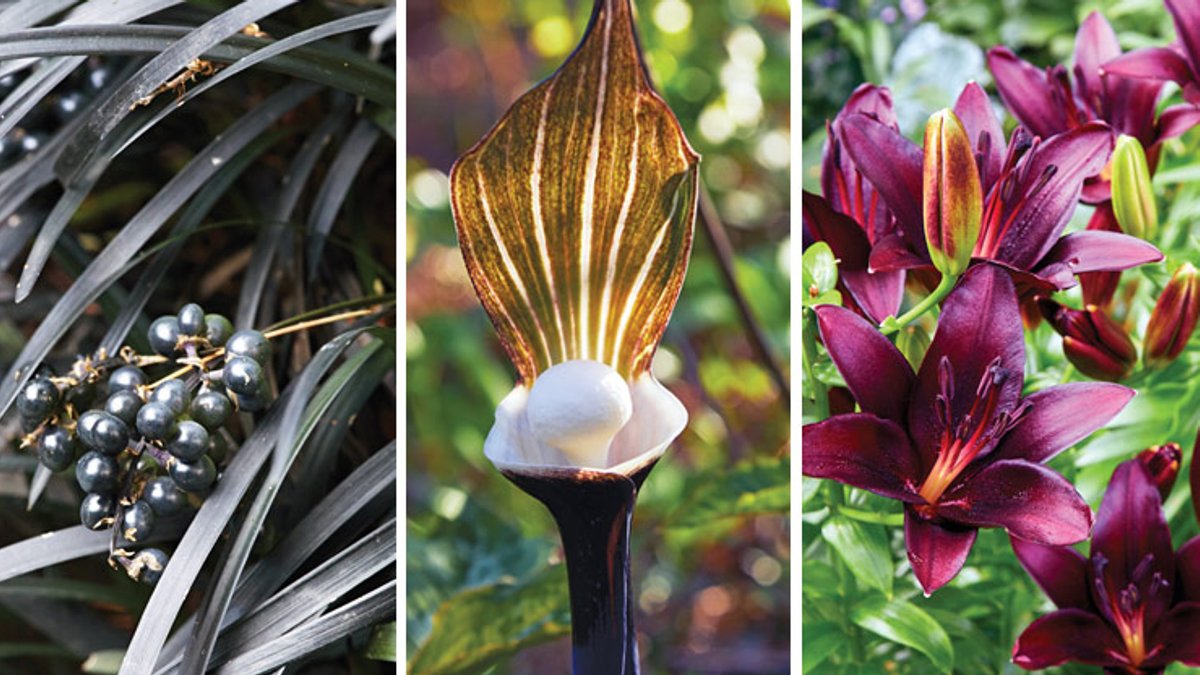
A gothic garden doesn’t need bright colors to make an impact. Deep, moody hues create drama and elegance, especially when paired with the right companions. While no plant is truly black, many varieties come close—shifting between burgundy, purple, and near-black depending on the light.
These plants thrive in both sun and shade, but their effect strengthens when set against silvery foliage or lush greenery. ‘Jack Frost’ brunnera or lamb’s ear, with their pale leaves, make dark blooms stand out. Ferns and hostas add depth, preventing the darker plants from blending into the background. White or pale flowers can brighten the space, drawing the eye without overpowering the mood.
The right setting turns a garden into a scene
The appeal of a midnight garden isn’t about darkness—it’s about atmosphere. Soft lighting, like solar path lights tucked beside inky foliage, extends the effect into the evening. Reflective accents, such as gazing balls or mirrors, catch ambient light and deepen the sense of mystery. The design isn’t meant to feel somber, but intentional, elegant, and slightly unexpected.
Related: Five Timeless European Garden Design Techniques
Most of these plants don’t demand perfect conditions, but they require thoughtful placement. Too much sun can scorch delicate leaves, while too little may mute their color. The best approach treats them like actors on a stage: give them a backdrop that makes them shine, then let them perform.
Five plants that bring the drama
Japanese cobra lily (Arisaema sikokianum) emerges in early spring with a hooded bloom resembling something from a fairy tale. Its 8-inch spathe is striped in purple, green, and white, surrounding a snowy white spadix. By late summer, the flowers fade into vivid red berries that linger for weeks. It prefers moist, humusy soil and shade—ideal near ponds or in woodland gardens. Grown from seed, it can take three to five years to bloom.
‘Green Wizard’ coneflower (Rudbeckia occidentalis) skips the usual yellow petals for green sepals framing a nearly black cone. This North American native is hardy in zones 3 to 9.
‘Black Sprite’ bachelor’s button (Centaurea montana) gives a familiar cottage garden flower a moody twist with its deep burgundy, thistlelike blooms.
Related: Designer Offers Insight into Home Decor Style
A garden designed around these plants feels less like a collection of flowers and more like a carefully curated scene. Every element has a role, and the key is balance: enough contrast to keep the eye moving, but not so much that the mood fractures. The outcome isn’t just beautiful—it’s striking.
Most of these varieties return year after year, though a few may require special care in cooler climates. Even the hardiest options benefit from occasional division to maintain vigor. While they’re often marketed as “black,” their true appeal lies in their depth—the way they absorb light in some moments and reflect it in others, shifting with the day.
To create order in such a space, consider how structure supports the overall design. Evergreen elements can anchor the darker tones, ensuring the garden remains cohesive throughout the seasons.


