
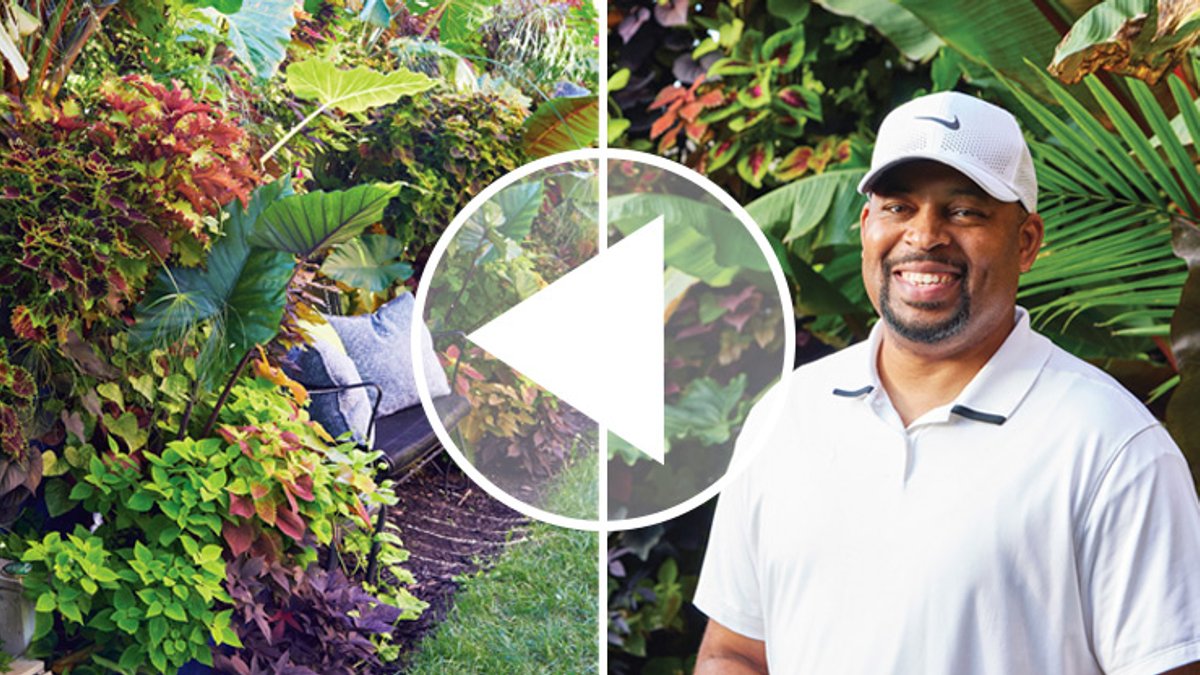
Creating a tropical garden oasis in a narrow urban side yard may sound ambitious, but one Chicago police officer shows it’s doable with modest resources and careful planting.
Planning the layout and choosing hardy foliage
Deronis Cooper began his project after buying a townhome 17 years ago, inspired by childhood gardening with his grandmother. He started with a 32‑foot‑long raised bed, filling it with a mix of topsoil and peat moss for drainage, then topping it each year with a bag of Miracle‑Gro soil.
To add privacy, he planted a wall of coleus, sweet potato vines, dwarf palms and Red Abyssinian bananas along the wrought‑iron fence. The dense foliage blocks the street view while delivering bright color that catches the eye of passersby.
Finding budget‑friendly containers was essential. The officer scoured Facebook Marketplace for metal storage boxes, spray‑painting them black and drilling drainage holes. He also repurposed two 59‑gallon oak barrels, turning them into towering planters that hold elephant ears, bananas and a cascade of sweet potato vine.
Elephant ear leaves can reach 7 feet in height, and the largest banana in his yard once grew to 14 feet. These tall specimens provide a canopy, while mid‑height coleus and low‑lying vines create layers that give the space a lush, three‑dimensional feel.
Cooper follows a simple planting formula: a “thriller” plant for height, a “filler” for mid‑level texture, and a “spiller” that drapes toward the ground. This approach ensures each container displays a balanced silhouette.
Building and maintaining container displays
Beyond the raised bed, almost every plant lives in a container. The metal boxes sit behind the fence, while windowboxes line the top rail, extending the greenery upward. By painting containers to match the garden’s color scheme, he keeps the visual theme cohesive.
He uses Osmocote® slow‑release fertilizer mixed into the potting medium at planting time, then applies liquid feed with a Miracle‑Gro® Garden Feeder hose attachment about once a week. Watering remains the biggest chore; on hot days he may hose the barrels two or three times.
Because the barrels weigh about 115 pounds, moving them indoors for winter isn’t practical. The oak wood weathers the elements, though one barrel needed replacement after eight years of exposure.
Related: Historic Palm Beach House Restored to Original Glory
Cooper also installed 36‑inch‑by‑9‑inch windowboxes on the privacy fence, which help blend the tallest plants into the barrier and make the fence appear less defined. These boxes require daily watering in summer, but the effort pays off with a seamless backdrop.
The yard feels like a hidden oasis.
Urban dwellers across the Midwest have increasingly turned compact yards into dense, foliage‑rich spaces, echoing the approach seen here. By treating a side yard as a canvas rather than a limitation, residents can bring a slice of the tropics to a climate that rarely offers such warmth.
Seasonal care and community sharing
Planting begins in spring when nighttime lows hover around 50 °F, reducing frost risk. Cooper works from the back of the yard forward, usually completing the layout in three to four weeks.
Maintenance after planting is straightforward: the primary task is watering, especially on the western‑facing side that receives strong afternoon sun. A mature tree near the front provides some shade, lessening evaporation.
Because most selections are foliage‑focused, there’s no need for deadheading. If a coleus blooms, he leaves the flowers in place, allowing the added color to enhance the overall palette.
When October shortens days and temperatures drop, Cooper invites neighbors and followers to claim excess plants via social media. He doesn’t have space to overwinter them, and sharing helps spread the garden’s influence throughout the neighborhood.
Through careful plant selection, creative use of reclaimed containers, and a commitment to regular watering, a modest side yard can become a lively, tropical‑styled retreat that offers both privacy and visual delight.


