
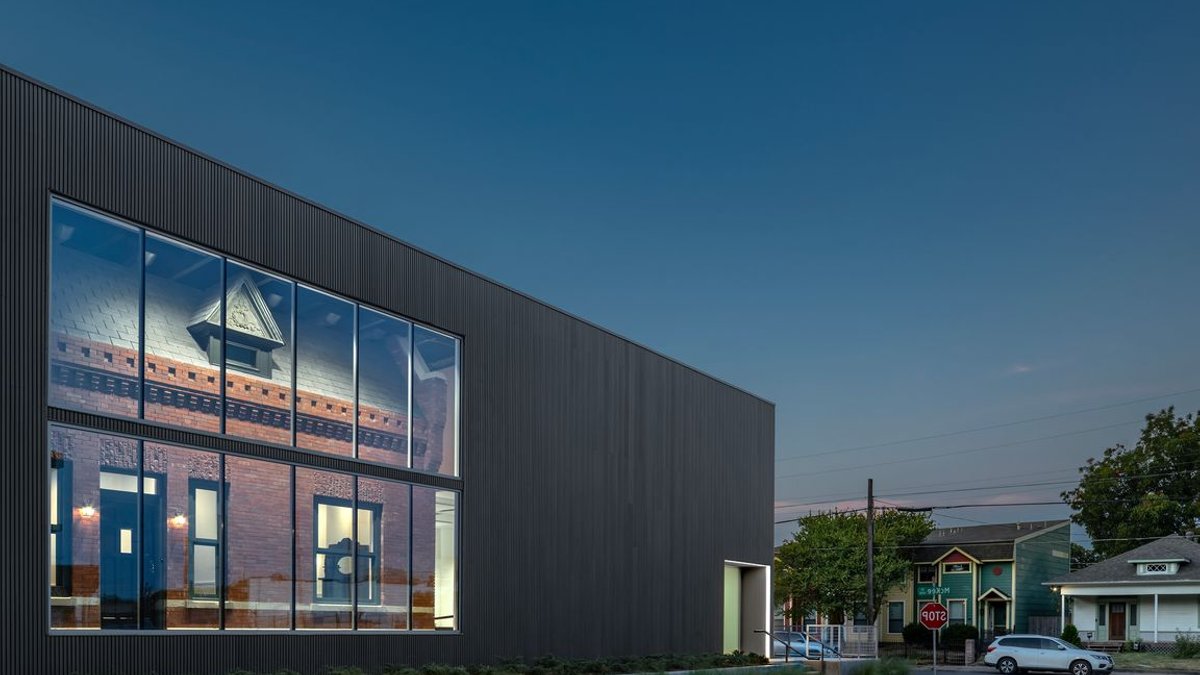
In Dallas, a 1903 Victorian home was on the verge of collapse when local restaurateur Shannon Wynne purchased it in 2021. After a neighbor reported that the home was falling over, Wynne brought in structural engineers, who delivered a terminal diagnosis due to excessive water damage and a lack of traditional foundation.
Wynne then called architect Russell Buchanan, with whom he had worked on other restoration projects. Buchanan devised an experimental solution: building a modern aluminum home around the original brick Victorian property.
The design involved disassembling the original home, rebuilding it on a proper foundation, and then enclosing it within the contemporary structure. Buchanan explained that this approach would protect the historic building from the elements and preserve its original character.
A Unique Solution
The project required deconstructing the original home from the top down, documenting every detail, and then reassembling it within the new structure. The team removed each brick, cleaned and stored them off-site, and rebuilt the home using the original materials wherever possible.
The finished 3,800-square-foot design includes all of the home’s original elements, including the brick, wood beams, doors, and windows. The floor plan remains largely original, with only minor adjustments to accommodate a contemporary cooking space.
Preservation and Protection
Wynne and his business partner Casey McManemin wanted to demonstrate the importance of protecting everyday architectural legacy in Dallas. By giving this non-landmarked home a rigorous historic preservation treatment, they aim to show that even ordinary buildings deserve careful preservation.
The exterior structure presents the Victorian home as an artifact, enclosed reverentially in a display-case-like box. The design has sparked interest and curiosity, with visitors often unsure whether they are inside or outside the original home.
A Functional Home
Despite its unconventional design, the completed project is a fully functional home, with a primary bath, powder room, and primary bedroom. Wynne and McManemin are still determining the property’s future use, but they wanted to ensure it remained livable.
The unique challenge of decorating the space between the Victorian’s exterior and the modern structure’s interior may pose a problem for future occupants. However, Wynne hopes that visitors will internalize the core message of the design: that the red brick Victorian is worthy of a second chance.
Wynne notes, “We wanted to do a new spin on restoration that shows that you’ve sometimes got to go to exhausting lengths to protect something that’s important.” The project’s success demonstrates that with creative thinking and careful preservation, even the most deteriorated buildings can be saved and restored to their former glory.


